

Effective Recruiting Strategies for Manufacturing Throughout Economic Uncertainty
You can’t build a future-ready factory with yesterday’s hiring strategy, especially when today’s economics are rewriting the rules.
U.S. manufacturing is facing a paradox. Record reshoring and facility investment are accelerating growth, while inflation, tariff uncertainty, and shifting skill demands are tightening margins and disrupting workforce planning.
The risk isn’t just open roles.
It’s the compounding cost of hiring without a scalable strategy.
Economic Pressure Meets a Talent Crisis
Manufacturers are navigating three overlapping forces:
Inflation Is Squeezing HR Budgets
Rising materials, energy, and labor costs are compressing margins. HR teams are being asked to reduce cost-per-hire, limit agency spend, and scale hiring, often without adding headcount. At the same time, nearly 40% of manufacturing skills are expected to change over the next 5 years. Reactive hiring models built on outdated job descriptions simply can’t keep pace.
Tariff Volatility Is Disrupting Workforce Planning
Shifting trade policy and supply chain pivots are forcing manufacturers to reshore and expand on compressed timelines. That creates hiring surges tied to:
- New facility launches
- Seasonal production peaks
- M&A integration
- Product line expansion
Internal teams aren’t built to scale up and down overnight. The result? Excess reliance on high-cost staffing agencies or production delays caused by workforce gaps.
Talent Shortages Are Already Impacting Operations
Manufacturers report:
- Ongoing difficulty filling critical roles
- Product delivery delays due to staffing gaps
- Lost business opportunities tied to workforce shortages
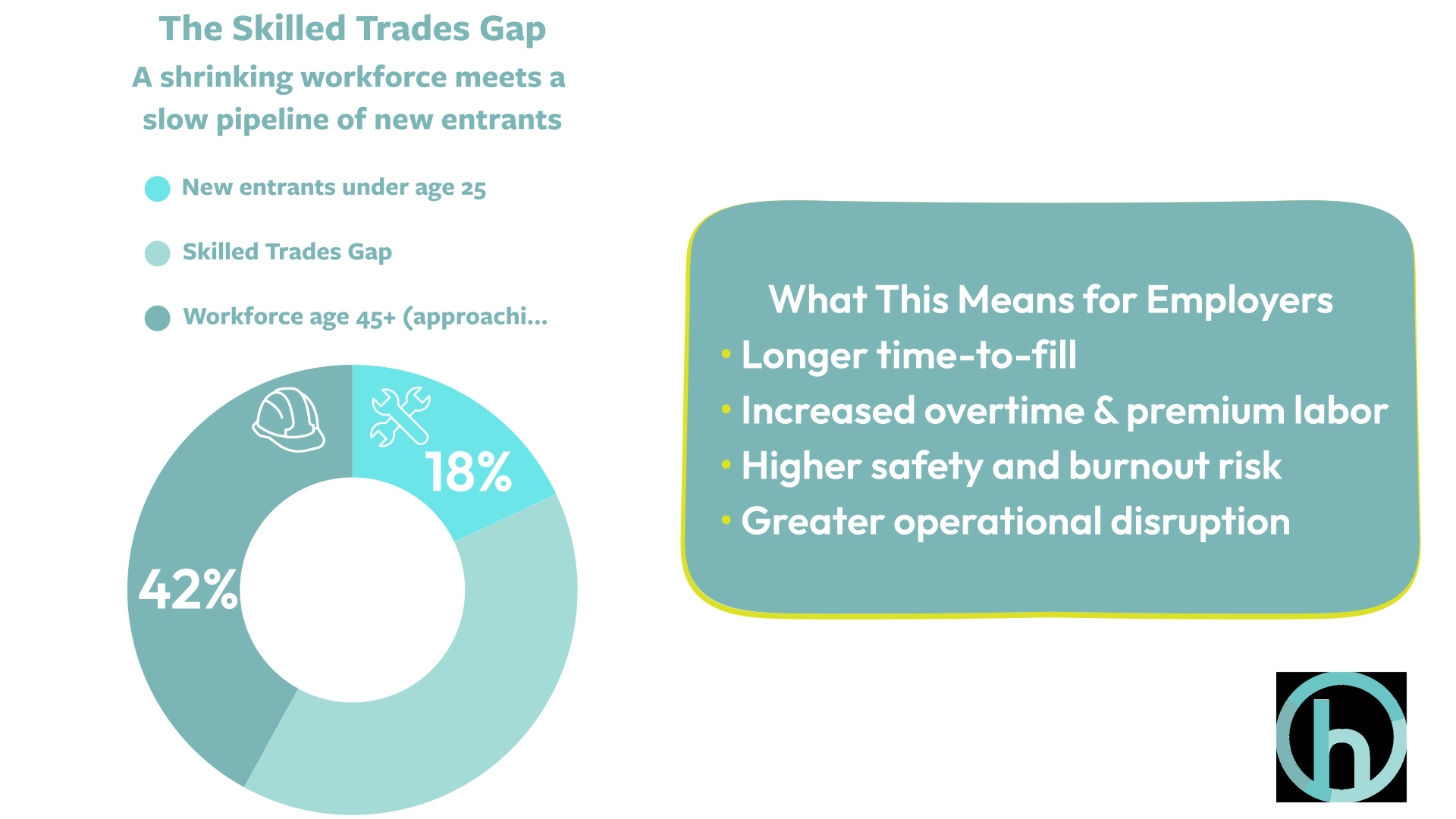
An aging workforce, digital transformation, and growing demand for automation and analytics skills are intensifying the challenge. The real danger isn’t today’s vacancy. It’s understaffed lines, rising agency costs, quality risks, and stalled growth.
A Cost-Predictable, Scalable RPO Model
In times of economic uncertainty, flexibility and cost clarity matter more than ever. Recruitment Process Outsourcing (RPO) provides recruiting infrastructure that scales with production demand, without adding fixed internal overhead.
Cost Predictability
Unlike staffing agencies with variable markups, RPO delivers:
- Honest pricing
- Lower overall recruiting spend
- Reduced dependency on contingent labor
- Improved budget forecasting
For CFOs, that means greater financial control.
For HR leaders, it means reinvesting in long-term employee stability.
Scalable Recruiting Capacity
Manufacturing hiring is cyclical. RPO models flex with demand, ramping up for launches and surges, scaling down during slower cycles. This protects margins while sustaining hiring momentum.
Workforce Intelligence & Skills-Based Hiring
Manufacturing RPO integrates:
- Labor market analytics
- Wage benchmarking
- Skills-gap assessment
- AI-powered sourcing
- Competency-based screening
By shifting from experience-only hiring to skills-based frameworks, manufacturers expand talent pools and build adaptable teams prepared for automation and digital transformation.
Retention-Focused Recruiting
Economic pressure magnifies the cost of early turnover. RPO prioritizes culture alignment, realistic job previews, and first-90-day retention tracking, stabilizing production and protecting institutional knowledge.
Resilient Manufacturing Workforces
Manufacturers who move from reactive hiring to a strategic RPO model see measurable impact:
- Faster time-to-fill for critical roles
- Reduced agency and premium labor spend
- Improved first-90-day retention
- Accelerated staffing for new facilities
- Greater visibility into hiring ROI
More importantly, leadership regains control.
CHROs elevate talent acquisition strategically.
COOs stabilize manufacturing schedules.
CFOs gain cost predictability.
CEOs protect growth and investor assurance.

Build for What’s Coming
You can’t control inflation or tariff policy.
But you can control how you build your workforce. The manufacturers that win in uncertain economies aren’t simply investing in facilities; they’re investing in scalable, strategic talent infrastructure. Because you can’t build a future-proof factory without a future-proof workforce strategy. Contact us today!